PM Vishwakarma Awareness Camp — Kishanganj 2026
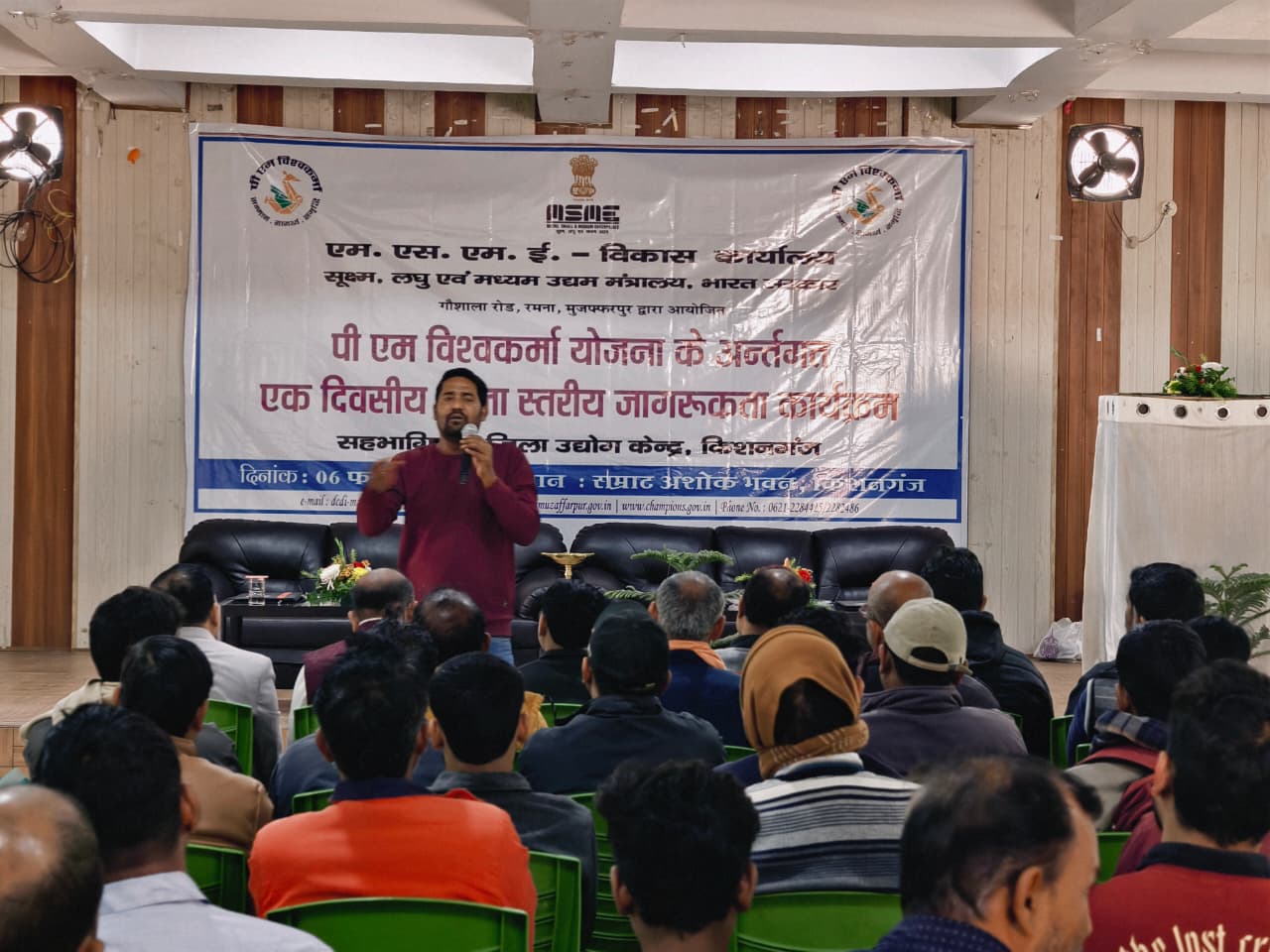
PM Vishwakarma Awareness & Ecosystem Programme — Kishanganj, Bihar · 6 February 2026 · Organised by MSME Development Office, Muzaffarpur
Introduction
Government support creates opportunities. Entrepreneurship converts those opportunities into sustainable livelihoods. The space between those two things — between a scheme benefit received and a business that sustains a family — is where most of the real work happens. And it is exactly the space that the PM Vishwakarma awareness programme in Kishanganj was designed to address.
On 6 February 2026, I was in Kishanganj, Bihar — invited by the MSME Development Office, Muzaffarpur as a Marketing Training Mentor and Industry Practitioner. The room held PM Vishwakarma beneficiaries, artisans, rural entrepreneurs, government officials, and ecosystem stakeholders. The agenda was awareness. The conversation that emerged went considerably deeper than that.
About the PM Vishwakarma Awareness Programme
The Pradhan Mantri Vishwakarma Yojana is one of India’s most direct investments in traditional craftsmanship — providing skill upgradation, modern toolkits, financial support, and capacity building to artisans across 18 trade categories. The Kishanganj programme, organised by MSME-DFO Muzaffarpur in collaboration with local stakeholders, brought these benefits into direct contact with the beneficiaries they were designed for.
What made this programme distinct was its scope: beyond scheme explanation, it was structured to help participants understand how to activate the support they had received — how toolkit investments translate into better products, how financial support enables business planning, and how market awareness turns production capacity into revenue.
My Invitation as Marketing Mentor
The MSME Development Office, Muzaffarpur invited me as an Industry Practitioner for a specific purpose — to bring ground-level market experience directly to beneficiaries who had received scheme support but needed the commercial knowledge to use it effectively. My role was not to explain the scheme. It was to answer the harder question that follows scheme awareness: now that I have the support, how do I build something that lasts?
That question sits at the intersection of marketing, business planning, and entrepreneurial confidence — and it is the question that 10+ years of working in digital marketing, MSME business development, and artisan ecosystem building had been preparing me to answer in exactly this kind of room.
Bridging Support and Entrepreneurship
The session was built around one central argument: market understanding is not a supplement to scheme benefits — it is what activates them. A toolkit is more valuable when you know what products to make with it. Credit support is more effective when you have a business plan that tells you how to deploy it. Skill development pays off faster when you understand who your customer is and what they will pay.
We covered how customer expectations work in 2026 — what urban buyers want, what institutional procurement requires, and why presentation, branding, and consistency are the three variables that most determine whether a rural product reaches a premium market or stays locked in a local one. The conversation was practical throughout, anchored in real examples rather than frameworks.
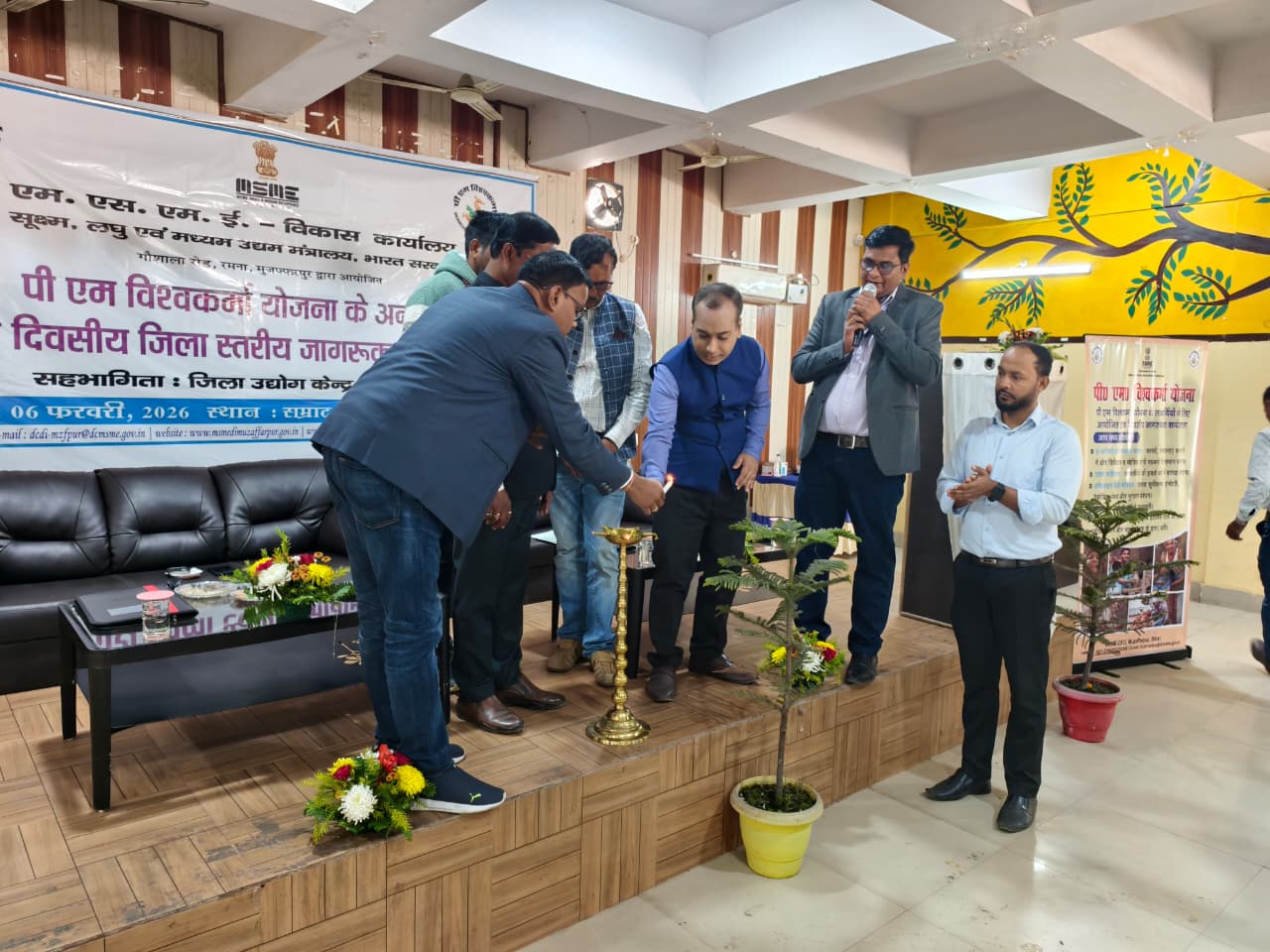
Opening ceremony — PM Vishwakarma Awareness Programme, Kishanganj, Bihar · MSME Development Office, Muzaffarpur, Government of India
Conversations With Beneficiaries
The questions from participants in Kishanganj had a particular quality — they were not abstract. A craftsman asked how to price a product when local buyers always push back on any price above a certain threshold. An entrepreneur asked whether it was better to start selling on WhatsApp or on a marketplace platform. A young beneficiary asked how to photograph products well without professional equipment.
Each question is a specific, answerable problem. And each one reflects a community that is not waiting passively for opportunity — it is actively trying to navigate toward it, with incomplete information and no roadmap. That navigation gap is the most important problem in India’s artisan and MSME ecosystem. Programmes like this exist to close it, one conversation at a time.
The Importance of Market Awareness
Awareness is the first step toward empowerment — but awareness of what? The PM Vishwakarma programme is correctly focused on scheme awareness. What needs to accompany it, at every stage, is market awareness: understanding who the buyer is, what they value, how purchasing decisions are made, and what separates a product that sells from one that does not.
Market awareness is not taught in most skill development programmes. It is not covered in scheme documentation. It lives in practitioner experience — in the knowledge of people who have built businesses, run campaigns, worked with buyers, and observed what works and what does not across real commercial contexts. That is what industry practitioners bring to programmes like this, and why the combination of government infrastructure and market knowledge is more powerful than either alone.
Lessons From Kishanganj
The day confirmed what the previous PM Vishwakarma programmes in Manihari and Purnea had also shown: the demand for practical, applicable market knowledge among beneficiaries is consistent, deep, and underserved. Every district, every artisan category, every stage of business development — the same need surfaces. Not for motivation. Not for scheme explanation. For the specific knowledge of how markets work and how to navigate them.
The second lesson is about ecosystem building. A single awareness programme changes individual trajectories. A network of programmes, tools, mentors, and market connections changes the ecosystem. That is the scale of intervention India’s artisan economy requires — and the scale at which Dream of Soul Foundation is building.
Why Ecosystem Building Matters
Places like Kishanganj are witnessing something significant: growing interest in self-employment, local manufacturing, artisan businesses, and value-added rural products. This emerging entrepreneurial energy is not a policy outcome. It is an organic response to improving connectivity, rising aspirations, and the gradual visibility of what is possible when artisan products reach the right markets.
What this energy needs is infrastructure — digital tools, market connections, mentorship networks, and institutional procurement channels that take it seriously as a commercial force rather than a welfare category. That infrastructure is what Dream of Soul Foundation is building, field programme by field programme, tool by tool.
How This Aligns With Dream of Soul’s Mission
Dream of Soul’s three-layer structure — the Foundation’s field programmes, the proprietorship’s commercial operations, the LLC’s export infrastructure — is designed precisely for this kind of ecosystem role. We are not a charity that occasionally runs training. We are a permanent piece of market infrastructure that shows up in Kishanganj, builds tools based on what we hear there, and creates channels through which what artisans make reaches the buyers who will pay what it is worth.
The free digital tools on this platform — Scheme Checker, Market Navigator, Catalogue Builder, Artisan Onboarding — are direct translations of conversations from programmes exactly like the one in Kishanganj on 6 February 2026.
Marketing Mentor GoI
ISO 9001:2015
ISO 14001:2015
ZED Bronze
IEC Export Enabled
Section 8 NGO
12A Provisional
80G Provisional
CSR-1 Active
NGO Darpan Verified
GeM Registered
Market Navigator for Artisans & MSMEs
Identify the right markets, platforms, and buyers for your products. Free for every artisan and entrepreneur.
Looking Ahead
Dream of Soul’s engagement with the MSME Development Office, Muzaffarpur and the PM Vishwakarma ecosystem across Bihar continues. Kishanganj was the first of several planned interactions in the district — and the conversations from this programme directly inform the next phase of tool development, field programme design, and institutional procurement channel building.
The future of India’s artisan economy will be built in places like Kishanganj — not despite their distance from metropolitan markets, but because of the authentic craft identity and entrepreneurial energy that those markets have not yet been able to dilute.
Final Reflections
Leaving Kishanganj, I carried something I carry from every field programme: a clearer picture of the specific gap between where India’s artisan ecosystem is and where it needs to be. Not an abstract gap — a concrete one, with specific dimensions, specific solutions, and specific people already moving toward it with the tools they have.
Dream of Soul’s job is to give them better tools. Better market access. Better pricing intelligence. Better channels to the buyers who will recognise the value of what they make. That job is long, and it is not done. But it is exactly the right job to be doing — and rooms like the one in Kishanganj on 6 February 2026 are where it begins.