PM Vishwakarma Trade Fair — Kishanganj 2026
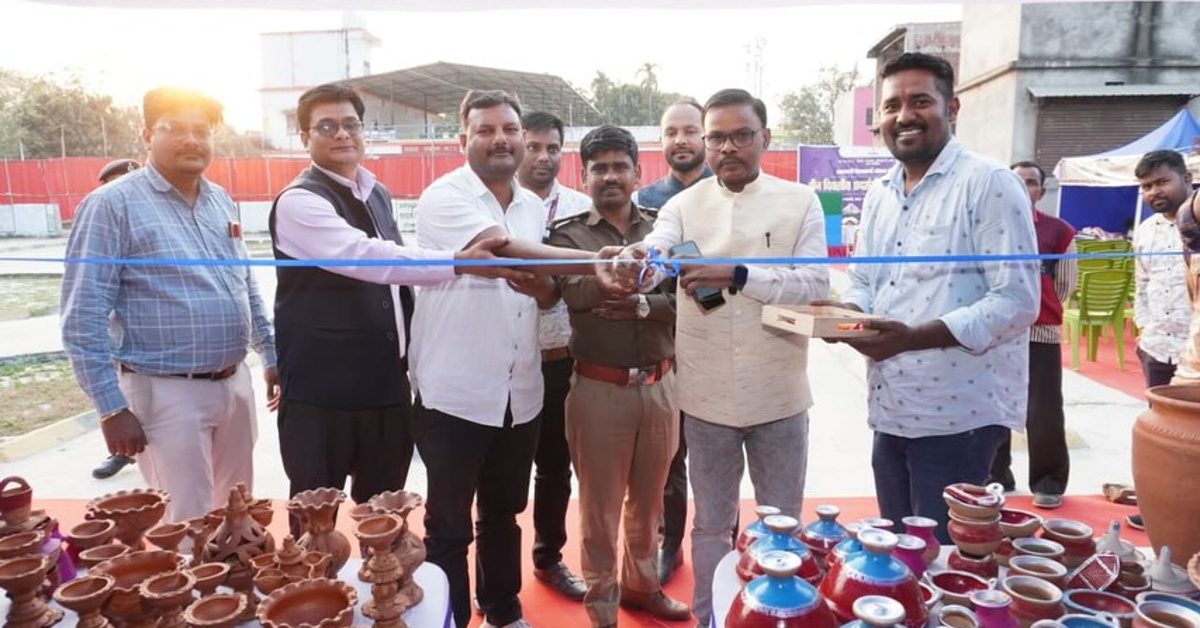
PM Vishwakarma Trade Fair — RTO Ground, Khabra, Kishanganj, Bihar · 21–23 February 2026 · Organised by MSME Development Office, Muzaffarpur
Introduction
There is a particular kind of silence you notice when you walk through a trade fair at 9 in the morning — before the visitors arrive, before the noise of commerce begins. Artisans are arranging their stalls. A bamboo craftsman adjusts the angle of a display piece he has carried from his village. A weaver smooths out a fabric she has spent three weeks making. They are not rehearsing. They are simply waiting to be seen.
I was at the PM Vishwakarma Trade Fair in Kishanganj, Bihar from 21 to 23 February 2026 — invited by the MSME Development Office, Muzaffarpur as a Market Expert under the Pradhan Mantri Vishwakarma Yojana. Three days, 50+ artisan stalls, and more conversations than I can fully account for here. What follows is my honest account of what I saw, what I learned, and what it confirmed about the work Dream of Soul exists to do.
About the PM Vishwakarma Trade Fair, Kishanganj
The Pradhan Mantri Vishwakarma Yojana was launched to recognise and empower traditional craftspeople — providing skill development, modern toolkits, credit support up to ₹3 lakh, and critically, market linkage opportunities. The Kishanganj trade fair was a direct expression of that last mandate.
Organised by the MSME Development Office, Muzaffarpur, the three-day fair at RTO Ground, Khabra brought together artisans from across the region working in bamboo craft, handicrafts, traditional manufacturing, and rural product sectors. Government officials, market development representatives, buyers, entrepreneurs, and community members moved through 50+ stalls — each one a small window into a skill that has survived generations.
My Role as Market Expert
The title of Market Expert carries a specific weight in this context — it is not an advisory role conducted from a conference room. At a PM Vishwakarma trade fair, it means being present on the ground, moving stall to stall, listening to what artisans are making and what they need, and offering honest, practical market perspective in real time.
My responsibilities included understanding artisan challenges firsthand, helping structure market opportunities, discussing branding and product positioning, identifying retail and institutional linkage possibilities, and connecting craftspeople with potential buyers present at the fair. More than anything, it meant being a translator — between the language of craft and the language of commerce.
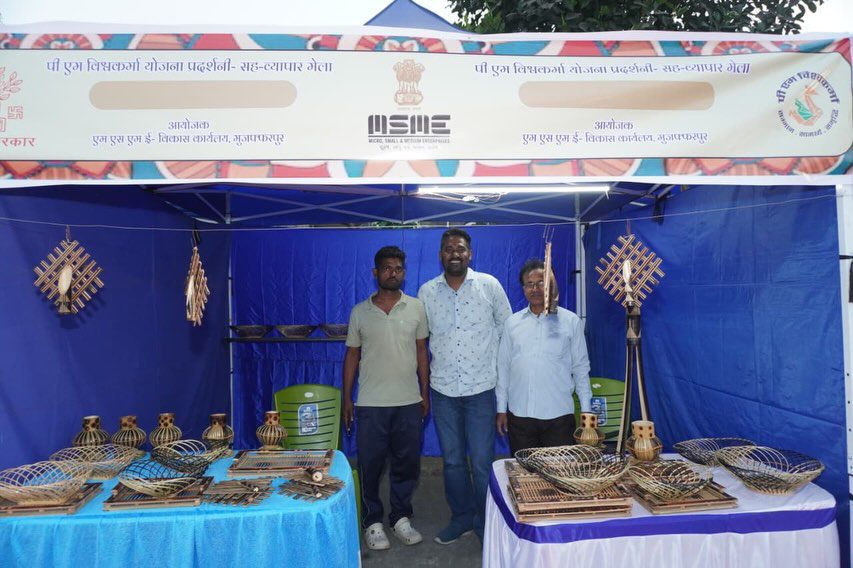
Artisans displaying handmade products at the PM Vishwakarma Trade Fair, Kishanganj — bamboo craft, handicrafts, and rural products from across Bihar
Meeting the Artisans Behind the Products
Walking through 50+ stalls over three days is not a passive experience. You stop. You ask. You hold things. A bamboo craftsman from a village outside Kishanganj showed me a set of household items — each one finished with a precision that would not look out of place in a premium urban store. He had been making them since he was twelve. His father had taught him. His grandfather had taught his father.
At another stall, a woman artisan had arranged a collection of handmade textiles with the care of a gallery curator. She knew exactly which piece had taken the longest, which pattern was the rarest, which item was most likely to sell first. She understood her products completely. What she did not have was language — the commercial vocabulary to describe what made her work valuable to a buyer who hadn’t grown up watching it being made.
That gap — between extraordinary skill and communicable value — was the defining theme of every interaction across three days.
Challenges Faced by Traditional Craftsmen
The challenges are well-documented in policy papers. Seeing them in person is different. Across conversations with artisans at the Kishanganj trade fair, the same cluster of issues surfaced repeatedly — not as complaints, but as simple statements of reality.
Market access was the most cited barrier. Artisans knew how to make. They did not know how to find buyers beyond their immediate geography. Branding and packaging came next — products that would command ₹800 in a Bangalore craft store were being sold for ₹120 because there was no story attached, no presentation infrastructure, no brand identity.
Digital visibility was almost entirely absent. Very few artisans had any online presence. Several had smartphones but no understanding of how to use them for commerce. Pricing confidence was another consistent gap — artisans routinely undervalued their own work because they had no reference point for what comparable products sold for in urban or export markets.
Why Market Linkage Matters
The PM Vishwakarma Yojana addresses skill development, toolkit support, and credit access. These are necessary. But the conversation that does not happen often enough is about what comes after — after the artisan has the tools, has the skills, has the loan. Who buys the product? At what price? Through what channel? With what story attached?
Market linkage is not a supplementary programme — it is the load-bearing wall of artisan empowerment. Without it, every upstream investment in skill and capital becomes a sunk cost. The Kishanganj trade fair was a visible attempt to bridge that gap, and it worked in important ways. But three days of a trade fair cannot substitute for the sustained, ongoing market infrastructure that India’s artisan ecosystem needs.
What I Learned During Three Days on the Ground
The most important thing I learned in Kishanganj is something I already believed but needed to see confirmed at scale: rural craft in India is not a welfare category. It is a commercial asset that has been systematically underpriced, underbranded, and underconnected.
The artisans at this trade fair were not waiting to be rescued. They were waiting for infrastructure — the same infrastructure that any manufacturer needs to reach a market: distribution, branding, pricing intelligence, digital presence, and institutional buyers who take them seriously.
The second learning is about the role of people like me in this ecosystem. The Market Expert role is not to tell artisans what to make. It is to help them understand what their work is worth, who wants it, and how to get it to them without losing 70% of the value to middlemen along the way.
How This Connects With Dream of Soul’s Mission
Dream of Soul was built on the belief that artisans deserve access to better markets, fair pricing, and sustainable growth — not as a philanthropic gesture, but as a commercial correction. The Kishanganj trade fair did not change that belief. It deepened it.
The conversations at those 50+ stalls directly inform the work we do: the free digital tools we build for artisans and MSMEs, the institutional procurement channels we develop, the export infrastructure we are building through Dream of Soul LLC, and the field programmes the Dream of Soul Foundation runs across Bihar and West Bengal.
ISO 9001:2015
ISO 14001:2015
ZED Bronze
Jute Mark India
IEC Export Enabled
Section 8 NGO
12A Provisional
80G Provisional
CSR-1 Active
NGO Darpan Verified
GeM Registered
PM Vishwakarma Scheme Checker
Check eligibility for PM Vishwakarma and 10+ government schemes instantly. Free for every artisan.
Looking Ahead
The PM Vishwakarma Trade Fair in Kishanganj was one event in a longer programme. The MSME Development Office, Muzaffarpur is running field activations across Bihar — and Dream of Soul’s engagement with that ecosystem continues beyond any single fair.
What needs to follow these events is persistent infrastructure: platforms where artisans can list products, tools to help them build catalogues, channels through which institutional buyers can discover and procure, and field support that does not disappear when the trade fair tent comes down.
That is the gap Dream of Soul Foundation exists to fill — not as a charity, but as a permanent piece of market infrastructure for India’s artisan economy.
Closing Reflections
On the last day of the fair, I watched a craftsman pack up his unsold inventory. He was careful with each piece — wrapping them the same way he would have before the fair, ready to carry them home. There was no frustration in his movements. Just patience. The patience of someone who has been making things for a long time and understands that markets move slowly.
That patience deserves a faster infrastructure. India’s artisan economy has waited long enough for the market connection it was always capable of sustaining. Events like the PM Vishwakarma Trade Fair in Kishanganj are necessary steps. The permanent work — of branding, linkage, digital visibility, and institutional procurement — is what comes next.